

Quick answer
Koh Lanta snorkeling from the beach is most productive at the southern headland within Mu Ko Lanta National Park, where rocky outcrops and shallow coral formations sit 10 to 30 meters from the shoreline. The national park charges a 200 THB conservation fee for foreign adults and opens daily from 08:30 to 17:30. Visibility ranges from 5 to 15 meters depending on tidal phase and recent weather, with calmer conditions and clearer water typically found between November and April.
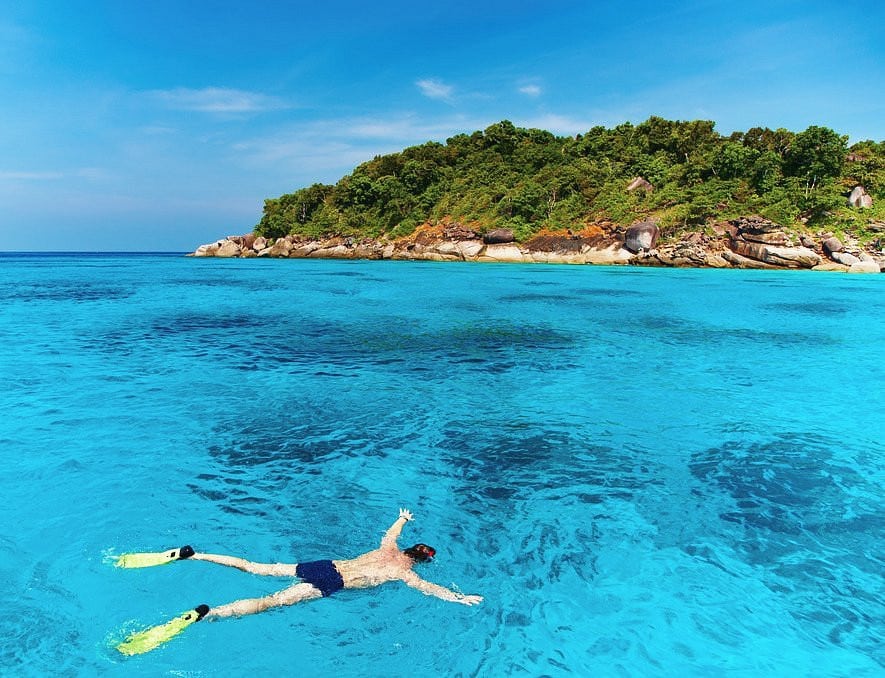
The southern tip of Koh Lanta holds the island's most accessible shore-entry snorkeling, where the limestone bedrock extends underwater to form shallow ledges colonized by hard corals, anemones, and sponges. Unlike the deeper drop-offs accessible only by boat, these near-shore zones allow snorkelers to stand, adjust masks, and swim short distances to reach feeding parrotfish, sergeant majors, and occasional blacktip reef sharks in water rarely exceeding three meters. Mu Ko Lanta National Park protects this coastline and enforces a conservation fee structure that funds reef monitoring and mooring buoy maintenance. The park boundary includes both the terrestrial viewpoint trail and the subtidal zone, meaning the same 200 THB entry covers access to the beach, the hiking trail to the lighthouse, and the surrounding waters. Most snorkelers arrive between 08:30 and 10:30 to secure parking near the beach access path and avoid the afternoon tour groups that arrive by longtail boat from the northern resorts. Shore snorkeling rewards patience and careful observation. The best coral cover appears along the rocky points flanking the main beach, where tidal currents deliver plankton and nutrients that support dense invertebrate populations. Snorkelers who follow the shoreline at a depth of one to two meters encounter cleaner wrasse stations, juvenile triggerfish sheltering in brain coral crevices, and occasional cuttlefish hunting over sand patches. The ecosystem here is not a continuous reef but a mosaic of rock, coral outcrops, and seagrass, requiring snorkelers to swim methodically rather than drift. Visibility shifts with lunar tides and seasonal monsoon patterns. The northeast monsoon season from November through March brings calmer seas and clearer water, while the southwest monsoon from May through October stirs sediment and reduces underwater clarity to 3 to 5 meters. Even during the wet season, early morning sessions before wind picks up offer workable conditions. Koh Lanta snorkeling from the beach delivers reliable marine encounters for those willing to time their entry with tidal charts and weather windows.
“The limestone bedrock extends underwater to form shallow ledges colonized by hard corals, anemones, and sponges, allowing snorkelers to stand and adjust before swimming short distances to reach feeding zones.”
Opening Hours for Koh Lanta Snorkeling From the Beach
Mu Ko Lanta National Park maintains consistent operating hours throughout the week to manage beach access for snorkeling. The park is open daily to accommodate visitors.
| Monday | 08:30–17:30 | |
|---|---|---|
| Tuesday | 08:30–17:30 | |
| Wednesday | 08:30–17:30 | |
| Thursday | 08:30–17:30 | |
| Friday | 08:30–17:30 | |
| Saturday | 08:30–17:30 | |
| Sunday | 08:30–17:30 |
Getting to Koh Lanta Snorkeling From the Beach Locations
Beach snorkeling on Koh Lanta is centered at the southern tip of the island within Mu Ko Lanta National Park. The most effective way to reach this location is by private transport or hired taxi, as public transit does not serve this remote area.
Drive south via Saladan Road (Route 4245) until the road ends
Private hire from Saladan Pier or local resort areas
Follow the marked nature trail from the main park parking area
Pre-Visit Checklist for Koh Lanta Snorkeling From the Beach
Prepare these essentials before heading to the beach snorkeling sites around Koh Lanta.
-
Bring passport or ID copy — Required for national park entry and conservation fee payment.
-
Pack reef-safe sunscreen and rash guard — Protects skin without damaging coral; reduces reapplication needs.
-
Carry your own mask and snorkel — Rental availability varies by beach; ensures proper fit and hygiene.
-
Check tide schedules for your chosen beach — Low tide exposes reefs and limits visibility; plan around high slack tide.
-
Bring water shoes or reef boosters — Sharp coral and sea urchins are common on rocky entry points.
-
Pack drinking water and light snacks — Few vendors operate at remote beaches like Bamboo Bay or Kantiang.
-
Download offline maps of beach access routes — Cell coverage is patchy; trailheads to snorkel spots are poorly marked.
Check availability
Frequently asked questions about koh lanta snorkeling from the beach
Everything you need to know about koh lanta snorkeling from the beach